By – Manisha Neupane & Apeksha Dahal
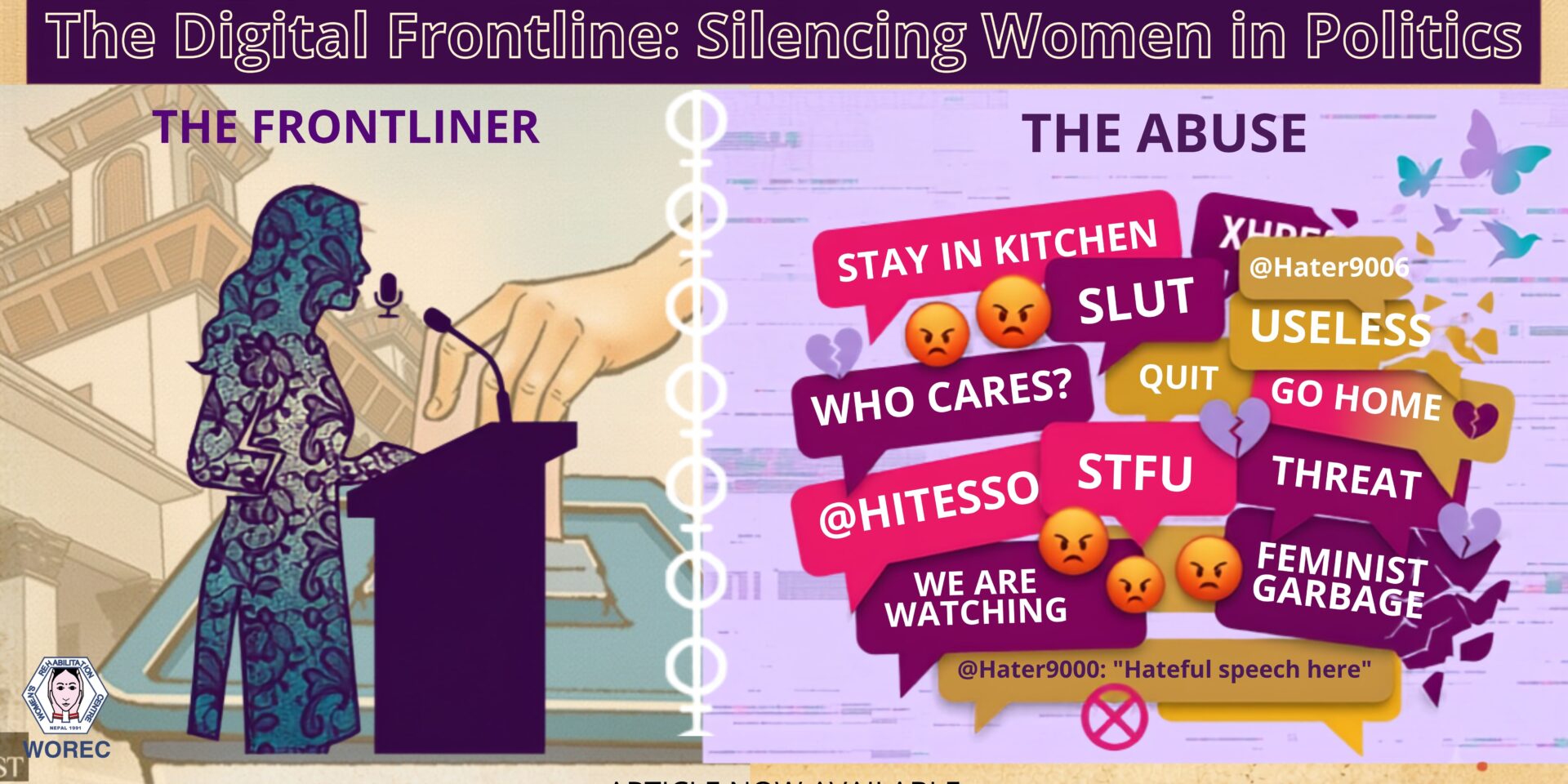
Digital harassment is not an accidental by product of modern technology; it is a deliberate mechanism of control rooted in patriarchal norms intended to “shut down” women’s public presence. True freedom of voice cannot exist while women are forced to weigh democratic participation against the risk of personal safety, psychological trauma, and sexualized humiliation.
The 2026 election patterns in Nepal must not be allowed to become the permanent digital norm. Addressing this crisis requires more than incremental legal adjustments; it demands a re-conceptualization of digital rights as human rights. To ensure the integrity of the democratic process, the state must move beyond “neutral” legislation and develop robust, enforceable protections that recognize the specific nature of gendered and identity-based violence. Only by closing the gap between law and lived experience can we reclaim the digital public square as a site of participation rather than a site of exclusion.